







If you were planning on sipping an espresso in Rome or catching a sunset in Santorini this June, hold that thought, as a major crisis is brewing in the sky and it has nothing to do with the weather.
The International Energy Agency (IEA) issued a shocking warning, reporting that Europe has roughly six weeks of jet fuel left in its storage tanks. With the summer rush starting in June, the continent is on a collision course with a massive travel shutdown. Let’s dive into the latest news and updates, and everything to know about why Summer Travel is at risk.
What’s causing the Crisis?
The current situation is the result of a ‘perfect storm’ of geopolitical conflict and geographical vulnerability.
- Heavy Reliance on Imports: While Europe uses a massive amount of fuel, it actually produces very little of its own ATF.
- The Outbreak of the Iran War: The crisis began on February 28, 2026. This conflict immediately put global supplies at risk.
- Exhausted In-Transit Supplies: For the past two months, Europe has been surviving on leftover fuel already on ships.
Why is the Tank Running Dry?
The ongoing Iran War has effectively closed the Strait of Hormuz, a maritime artery through which 40% of Europe’s jet fuel imports usually flow.
Fatih Birol, head of the International Energy Agency, mentions, “It’s a dire strait now, and it is going to have major implications for the global economy. The longer it goes, the worse it will be.”
Because these ships cannot get through, Europe’s fuel reserves are being drained every day. Experts say that by early June, the tanks will be so low that airports won’t be able to pump fuel into planes anymore.
Impact on Airlines and Flights
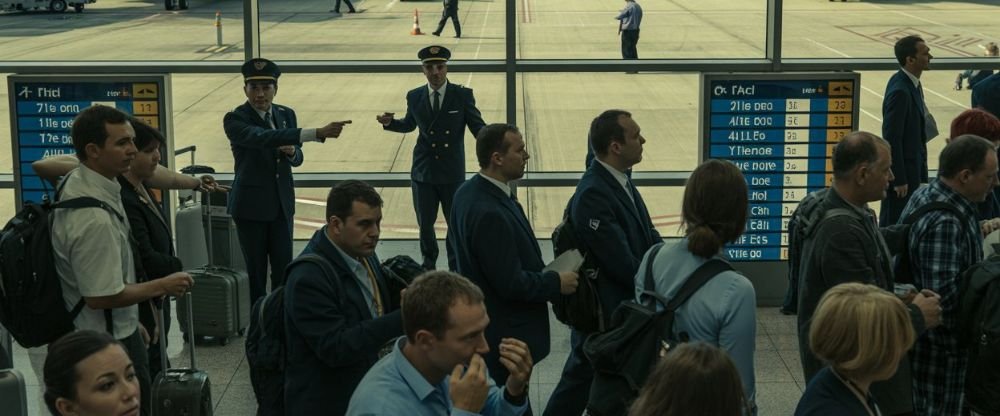
The aviation industry is currently in ‘survival mode’. While airlines usually plan their fuel needs months in advance, the total supply cut-off has rendered those plans useless.
“Some countries may be richer than others. Some countries may have more energy than others, but no country, no country is immune to this crisis,” said the Turkish economist and energy expert.
- Ryanair has officially warned that its suppliers can only guarantee fuel through the end of May.
- Next month, KLM will eliminate 160 flights to and from Amsterdam’s Schiphol Airport, accounting for almost 1% of its European routes.
- Spirit Airlines is reportedly facing a liquidation crisis because it cannot afford the massive surge in fuel prices, combined with a lack of available product.
What’s in Store for Summer Travel?
This year, travel plans will look a little different from past years due to the ongoing conflict.
- We are seeing a massive return of the ‘Fuel Surcharge.’ Expect to see an extra $100 to $300 added to international tickets just to cover the cost of kerosene.
- Airlines will likely prioritize ‘Hub-to-Hub’ flights. For example, a flight from New York to London is more likely to be on time than a short holiday hop from Paris to Ibiza. If fuel runs low, the short-distance budget flights will be the first to get canceled.
- The European rail network is seeing a massive surge. High-speed trains like Eurostar and TGV are already nearly sold out for July. The prices of these rail travel have jumped 40% in the last 30 days.
A Quick Reality Check for Travelers
Let’s start with a quick reality check on the situation.
| The Stat | The Reality |
| Current Fleet Reserve | Roughly 6 weeks (running out early June) |
| Daily Flights | -32,000 (approx.), but failing fast as airlines cut routes |
| Fuel Price | Hovering around $1,800 per tonne (a 100% increase) |
| Best Alternative | High-speed rail, but seats are filling up months in advance |
Survival Guide for Flyers and How to Prepare
If you have a trip planned for this summer, don’t just hope for the best. Take these steps to prepare and protect yourself.
- Many standard travel agreements do not cover ‘war’ or ‘fuel shortages.’ Make sure that you are covered for a ‘regional supply failure.’
- Book refundable everything. If the flights are canceled, the money spent on hotels will be wasted. From now on, book only ‘Free Cancellation’ hotels.
- Stay up-to-date with the news, especially on the Strait of Hormuz. If the blockade doesn’t end by mid-May, the chances of your June flight taking off are very slim.
- Under European law, if a flight is canceled, you are entitled to a full refund or a different flight.
What Happens Next?
The next six weeks are a critical ‘waiting game.’ “It will be extremely optimistic to believe that it will be very quick,” Birol said. “It will take gradually, gradually, up to two years to come back where we were before the war.”
- There are reports of the U.S. and E.U. navies providing ‘armed escorts’ for fuel tankers to force them through the Strait of Hormuz. However, this is a dangerous move that could further escalate the war.
- Countries such as Norway, Ireland, and Germany are considering opening up their military fuel reserves for civilian use. This could buy the industry another 2 to 3 weeks, but it is a ‘break-glass-in-case-of-emergency’ option.
- Even if the war ends tomorrow, IEA Director Birol warned that it could take up to two years for the fuel market to return to normal. The damage to refineries and the disruptions of shipping cannot be fixed overnight.
- Most analysts consider June 1 as a ‘Dry Date’. If no diplomatic solution is reached by then, non-essential flights across the European Union could be completely grounded.
Conclusion
We are entering a summer of uncertainty, with Summer Travel at Risk and Europe facing a Jet Fuel Shortage Warning. For the first time in decades, the problem isn’t the lack of pilots or crew; it’s that there isn’t enough fuel to get the aircraft off the ground. So, it is clear that the summer of 2026 will either be remembered for great vacations or for empty airports. Stay informed and always have a Plan B, that doesn’t involve boarding a flight.
FAQs
The core issue driving this disruption is a jet fuel shortage caused by the ongoing standoff at the Strait of Hormuz between the US and Iran.
Experts predicted that by June 1, many airports would hit a ‘dry line’ at which they would run out of fuel to keep their planes flying and maintain their schedules.
If you’re traveling within Europe, yes, and book it now. Prices of the trains like Eurostar and TGV are skyrocketing, and seats for July are already disappearing.
Under European law (EU261), you are entitled to a full refund or a new flight.
Only if the Strait of Hormuz reopens. While some fuel is being rerouted around Africa, it takes twice as long to reach its destination.


