








European air travel has certainly been affected by this disruption in Europe’s skies. Whether due to overcrowding at airports or aircraft unable to take off, many travelers have found themselves stranded. It happened on April 20, 2026, when it wasn’t just Europe’s air travel industry that was undergoing problems; it was its complete collapse. On that particular day, there were unprecedented delays and cancellations, resulting in 1,546 delays and 28 cancellations across eight countries.
So what is happening in the skies above Europe, and why should travelers be concerned?
Numbers That Speak Volumes: An Overview of Airline Disruptions
As of the close of April 20, Europe’s air traffic saw numerous disruptions impacting tens of thousands of travelers. Here are some figures that would shock even the most hardened numbers guy:
- Number of flights delayed: 1,546
- Number of flights canceled: 28
- Topmost airports with flight disruptions: Amsterdam Schiphol took the top spot, with 205 delays and 9 cancellations; second place went to Paris Charles de Gaulle, with 182 delays and 2 cancellations.
Some other major disruptees include:
- Rome Fiumicino (153 delays, two cancellations)
- Frankfurt (145 delays, two cancellations)
- Istanbul Airport (109 delays)
- London Heathrow (90 delays, seven cancellations)
The disruption was not limited to major airport facilities, as evidenced by the following:
- Venice Marco Polo (29 delays, one cancellation)
- Vnukovo, Moscow (14 delays, one cancellation)
From the Atlantic coast of Portugal all the way to the borders of Russia, no part of the European airspace escaped the disruption.
It was not only a matter of quantity but rather of speed. Every little delay triggered another one, as if by a domino effect. Being late in Lisbon would result in missed links in Paris, and cancellation in Munich would disrupt the whole holiday arrangements.
Airports Under Siege: Where It Hurt the Most
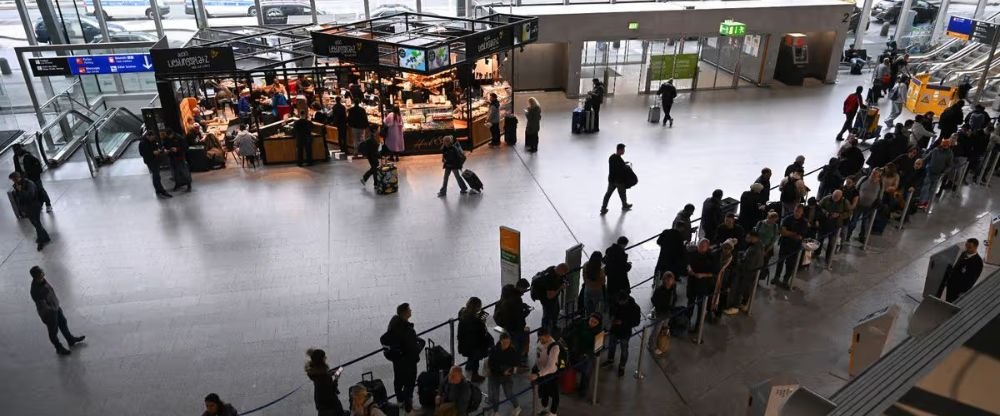
Time to focus on the epicenter. Every airport offered its unique form of torture:
- Amsterdam Schiphol – The reigning king of mayhem. With both KLM and Transavia being affected, travelers noted wait times that stretched to hours. Security lines wound through terminals while crew members moved planes around.
- Paris Charles de Gaulle – French airspace experienced its share of trouble here. Domestic flights within France and those to Europe were affected, prompting travelers to wonder whether to book again or stay put in a lounge.
- Rome Fiumicino and Milan Malpensa – Italian airports got their share of delays from ITA Airways and easyJet. Families headed off for their vacation homes, and busy businessmen trying to make important meetings found themselves stuck at the airport.
- London Airport triplets (Heathrow, Gatwick, and Stansted) – English airports experienced high delay numbers but relatively low cancellations. Flights from British Airways and easyJet were mostly affected, making short-haul flights to France last forever.
- Istanbul and Russian gateway cities—Turkish Airlines saw 85 delays in its own backyard, while Russia’s capital cities, Sheremetyevo and Vnukovo, contributed to the eastern wave of disruption. Long-haul travelers heading to Asia and the Middle East took a hard hit.
- Frankfurt and Munich to Lisbon and Nice—all big names had tales to tell. The image of Europe on that particular day resembled a failed aerial Tetris rather than a picturesque travel map.
Disruptions in the Air: Which Airlines Took the Worst Hit?
Certain airlines wore disruptions as a badge of pride, and pain:
- easyJet: 156 delays – the budget airline was affected at every major base, including London and Nice.
- KLM: 130 delays + 10 cancellations – the flag-carrier suffered from the largest number of cancellations.
- Lufthansa: 108 delays – the German carrier was heavily disrupted at its hubs of Frankfurt and Munich.
- Turkish Airlines: 85 delays – Istanbul was under high pressure.
- Air France, ITA Airways, Ryanair: All in the range of 50–75 delays, showing that none were spared.
Even premium airlines such as British Airways, Emirates, and Delta felt some ripples of impact. More expensive airlines such as British Airways, Emirates, and Delta were not immune to smaller, yet tangible effects. Take-home lesson – when Europe sneezes, everyone gets the flu.
The Human Side of the Story: Experiences of Travelers at Airports
Behind any statistic there’s a passenger. There was the young couple in Venice whose romantic getaway turned into an overnight adventure camping at an airport. The business traveler from Paris who couldn’t close a €50,000 deal after being delayed for 2 hours by Air France. The family from Lisbon whose children had a party at the airport.
EU261 regulations still allowed people to claim compensation for long delays (three hours) or cancellations within 14 days, yet going through all that trouble while tired and far from home was quite another thing. The system went down due to the high volume of rescheduling requests.
What Caused This Chaos?
This isn’t about a culprit, volcanic ash, ATC strikes, or unusual weather. It’s the perfect picture of a strained system, with spring travel, stretched schedules, aging facilities, and that timeless game of Air Traffic Control slots.
For years, Europe’s airports have been operating close to full capacity. With added recovery after winter, Easter travel incentives, and the standard “worst-case scenario” possibilities, this is precisely what one would expect. Industry experts following trends report an increasing frequency of such spikes, which outpace infrastructure developments due to faster passenger increases.
Sensible Steps for Stuck Passengers: The 2026 Guide
In case (or if) it ever happens to you:
- Use those phone apps – Airlines’ apps and FlightAware give better info than airport screens.
- Learn about your rights – EU261/UK261 can get you €250–€600 per passenger, plus meals and accommodation.
- Book smart – Always try a same-day solution and never accept vouchers until asked.
- Be ready – Carry snacks, a power bank, warm clothes, and a paper itinerary.
- Keep cool and informed – The airlines’ SMS flight status updates; make use of them.
Pro Tip: Download your airline’s rebooking regulations before you leave.
Final Thoughts!
April 20 brought home just how wonderful aviation is in Europe… until it’s not. As summer approaches, with concerns about possible jet fuel shortages in 2026 circulating due to the Iran war, it would be wise for passengers to have contingency plans up their sleeves.
The airlines are getting smarter with their predictive technology, while airports are expanding where they can. But what really needs to happen here? A concerted effort towards modernized air traffic management and realistic flight planning.
Until that happens, all of us will need to step up our game and help out, at least as passengers.
Rest assured, the skies will clear. Eventually. Until then, however, when you’re sitting at the airport hearing the announcement for yet another gate change, you’ll understand why—and what to do about it.
Related FAQs
No single event occurred that caused the situation. Causes included congestion at hub airports, coupled with spring travel demand, among others.
The airports with the most delays were: Amsterdam Schiphol (205 delays), Paris Charles de Gaulle (182 delays), Rome Fiumicino (153 delays), and Frankfurt (145 delays). Others are Heathrow, Istanbul, and Milan Malpensa.
The following companies suffered major disruptions: easyJet (156 flights delayed), KLM (130 flights delayed + 10 flights canceled), Lufthansa (108 flights delayed), Turkish Airlines (85 flights delayed), Air France (75 flights delayed), ITA Airways (67 flights delayed), and Ryanair (58 delays).
Of course, if you experience a delay or cancellation of the flight exceeding three hours’ notification, you are entitled to receive compensation up to €600 under EU261/UK261 laws, apart from meals and accommodation.
Purchase tickets with flexibility, use real-time flight updates through the airline’s app, arrive early at the airport, and monitor your flights.


